

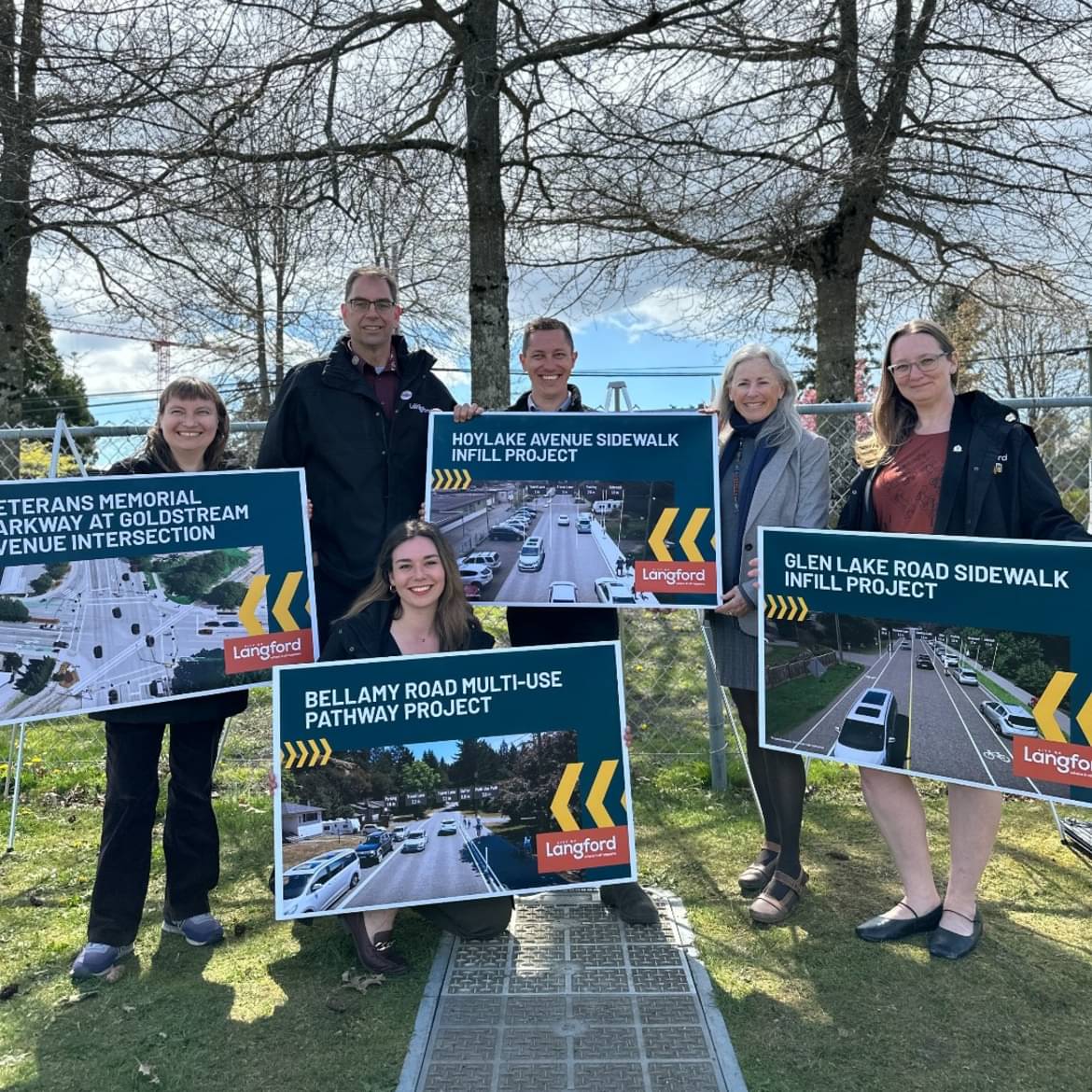
After years of only budgeting $400,000 to add new sidewalks every year, this term has seen over $15 million spent on road improvements for pedestrians and cyclists alone. Our new Active Transportation Plan will make sure that moving forward, we’re collecting the right amount of roadway and money needed to build safe street infrastructure from the get go.
Langford's sidewalk gaps are closing
For years, Langford budgeted just $400,000 annually for new sidewalks—a drop in the bucket for a rapidly growing city. New sidewalks were installed strictly along the frontages of new developments, leaving older, established neighborhoods left behind.
This term, we radically changed that by investing over $15 million in multi-use paths, sidewalk infrastructure, traffic calming and intersection improvements to catch up on years of missing links. We achieved this by strategically redirecting developer amenity funds, gas tax revenues, and provincial grant funding to cover these complex projects without passing a direct, crushing hit down to our local taxpayers.
Moving forward, we are ensuring we get it done right the first time while working collaboratively with the rest of our region. When new development happens, our proactive planning will guarantee we secure the exact roadway width and funding required to build safe, complete street infrastructure right from the start.
Over $15M in sidewalk infrastructure helps make more trips by foot possible for people of all ages, abilities and income levels
What this means for you
Until 2026, Langford held the title of being BC's largest municipality without official Master Plans for Transportation or Active Transportation. Without a master plan, roads were constantly being redesigned and reworked to solve acute, isolated problems rather than taking a system-wide approach to our mobility network.
While there is still plenty of work ahead to build a more equitable Langford, new sidewalks have already been added along Goldstream, Matson, Latoria, Happy Valley, Treanor, Hoy Lake, Bellamy, Atkins, and Westwind.
We all know Langford can't solve traffic on its own. While former councils passed on joining a Regional Transportation Service back in 2018, this term we chose collaboration. By partnering regionally, we can work more effectively to unlock bigger investments in regional transit—like rapid transit and LRT—to finally ease the crushing daily commute. Future councils now quite literally have the roadmap to keep Langford moving. The infrastructure is planned; now it comes down to the political will to fund it.